







Search Results for: Soochow University study

Can the Harms of Prolonged Sitting Be Offset by Coffee? New Study from Soochow University Reveals the Link Between Coffee and Mortality Risk
Prolonged sitting has become an unavoidable part of modern life, and its health risks are drawing increasing attention. Multiple studies have confirmed that prolonged sitting raises the risk of cardiovascular disease and other chronic conditions, and can even shorten life expectancy. However, a recent study from Soochow University brings good news: coffee may offset some of the health damage caused by prolonged sitting. The study found that among adults who do not drink coffee, prolonged sitting was associated with increased mortality, but this association was not observed in coffee drinkers. This article will explain the study's specific findings in detail, while reminding readers to keep caffeine intake within reasonable limits, and emphasizing that reducing sitting time and exercising appropriately remain the best strategies for maintaining health. [more…]

Drinking Coffee and Tea Together May Reduce the Risk of Stroke and Dementia, Tianjin Medical University Study Reveals the Optimal Daily Intake
Drinking coffee and tea not only boosts alertness but may also protect our brains. A new study from Tianjin Medical University, published in PLOS Medicine, based on long-term tracking data from more than 360,000 people in the UK Biobank, has for the first time revealed the link between coffee and tea intake and the risk of stroke and dementia. The study found that moderate daily consumption of coffee or tea, or a combination of both, can reduce the probability of stroke and dementia to the lowest level. However, excessive coffee consumption may instead increase the risk of dementia. So how much is best to drink each day? And how do coffee and tea exert their protective effects? This article will explain in detail the key findings of this study. [more…]

Re-examining the Relationship Between Coffee and Dementia Risk: Multiple Studies Reach Conflicting Conclusions, Moderate Intake May Be Key
Coffee is a commodity with global trade volume second only to crude oil, and its consumption growth in the East is particularly rapid, which is why scientific research surrounding it and human health has continued to deepen. Interestingly, the conclusions of related studies are not consistent: some have found that drinking coffee can slow cognitive decline, while others suggest that excessive consumption may shrink brain volume and increase dementia risk. This article reviews several representative cohort studies from around 2021, involving findings from Edith Cowan University in Australia, Tianjin Medical University, and the University of South Australia, attempting to clarify the complex associations between coffee intake and Alzheimer's disease and stroke, and to explore the relationship between the number of cups consumed daily and the safe upper limit of caffeine. [more…]

Can Sweetened Coffee Also Lower Mortality Risk? Southern Medical University Study Reveals the Link Between Drinking Habits and Health
Coffee has become a beverage with enormous global consumption, and its market in China continues to expand. More and more research has focused on coffee's effects on health, but previous studies have often overlooked the distinction between whether sugar is added or not. In 2022, a team from Southern Medical University published a paper in the Annals of Internal Medicine, using data from more than 170,000 people in the UK Biobank to analyze the relationship between unsweetened, sugar-sweetened, and artificially sweetened coffee and mortality risk. The results showed that moderate consumption of both unsweetened and sugar-sweetened coffee was associated with a lower mortality risk, but the amount of sugar added to sugar-sweetened coffee was far lower than that in commercially available fancy coffee drinks. This article interprets the core findings of that study and reminds consumers who like high-sugar coffee to pay attention to the difference. [more…]

The Tims flagship store on Shanghai University Road quietly closes, marking the end of a five-year landmark of youthful memories.
Recently, students near Shanghai's University Road discovered that the Tims Coffee University Road store, which had accompanied them for over five years, was dismantling its signage and quietly closing down. When it opened in 2019, this store was the largest location Tims had in Shanghai after entering the city. Comprising a two-story North American-style wooden cabin with a total area exceeding 400 square meters, it was not only a landmark meeting spot for nearby residents but also a carrier of youthful memories for many university students who studied, dated, and prepared for exams off campus. Its sudden closure has sparked widespread attention and regret, as well as various speculations about the reasons behind it. This article will revisit the unique features of this store, present the real reactions of customers, and sort out the possible reasons for its closure. [more…]

Study Finds: Regular Coffee Consumption May Help Delay Muscle Aging, Triglycerides Become Key Component
Besides waking you up, coffee may also bring unexpected benefits for muscle health. A latest study jointly conducted by research institutions in Switzerland, Singapore, the United Kingdom and other countries shows that trigonelline, a natural plant alkaloid in coffee, can boost NAD⁺ levels in the body and improve mitochondrial function, thereby helping to maintain muscle strength and slow age-related muscle degeneration. Published in a Nature sub-journal, the study offers coffee lovers a new health perspective. However, the researchers also caution that coffee is only a supplementary aid—balanced nutrition and regular exercise are fundamental to keeping muscles strong. [more…]

Can Drinking Coffee Lower Gout Risk? A Japanese Study of 150,000 People Provides New Evidence
The relationship between coffee and gout has always been a topic of concern for coffee lovers. In the past, people worried that caffeine metabolism would raise uric acid levels, but in recent years, multiple studies have pointed to the opposite conclusion. A large-scale study jointly conducted by the National Defense Medical College of Japan and Osaka University, involving more than 150,000 Japanese people, analyzed the association between the number of days per week of coffee consumption and uric acid levels and the incidence of gout. The results showed that for each additional day per week of coffee consumption, the risk of developing gout could be reduced by about 25%. This finding provides new data support for coffee's role in preventing gout and has also prompted further thinking about coffee components and the mechanisms of gout. This article will review the core conclusions of the study, previous research evidence, and expert opinions to help readers scientifically understand the relationship between coffee and gout. [more…]
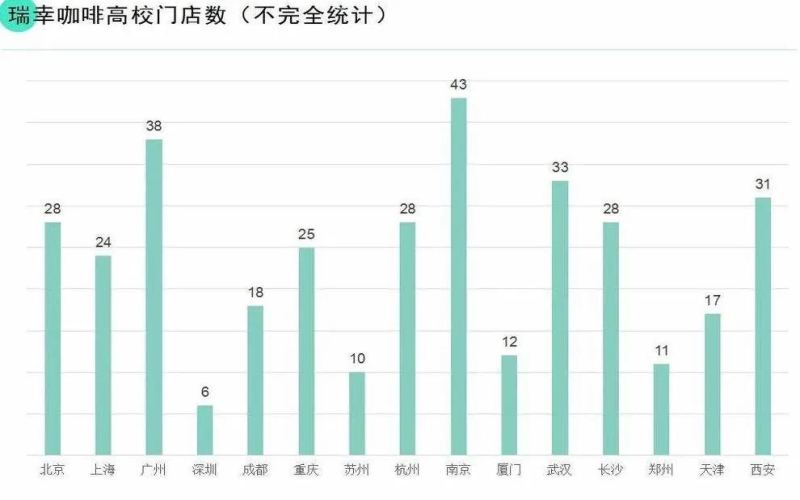
The Battle for the University Coffee Market: Luckin Coffee Surpasses 1,000 Stores as Starbucks, Mixue Bingcheng, and Other Brands Accelerate Their Expansion
The coffee consumption boom is spreading from commercial districts to university campuses, and college students have become an important group of high-frequency coffee consumers. Luckin Coffee has seized a first-mover advantage with more than a thousand campus stores, while brands such as Starbucks, Tims, Manner, M Stand, and NOWWA have also entered universities one after another, and Mixue Ice Cream & Tea's Lucky Cup is closely pursuing with about 260 campus stores. This article sorts out each brand's layout strategy, store data, and competitive situation on university campuses, and includes Front Street Coffee's specialty bean information, to help you understand the real landscape of the campus coffee track. [more…]

One Sugary Drink a Day Linked to a 253% Surge in Male Hair Loss? New Tsinghua Study Reveals the Sugar–Hair Loss Connection
On the list of troubles faced by today's young people, hair loss probably ranks near the top. Losing handfuls of hair at a young age, and watching their hairline recede day by day, many people have tried all kinds of anti-hair-loss methods, but the results vary from person to person. Besides genetic and disease factors, eating habits may also be quietly increasing the risk of hair loss. Recently, a study published by researchers from Tsinghua University in the nutrition journal Nutrients offered a new idea for young people troubled by hair loss—quitting sugar to prevent baldness. The study surveyed 1,028 participants across 31 provinces nationwide and found a significant association between sugar-sweetened beverage intake and the risk of hair loss in men. Men who drank more than one 500-milliliter sugar-sweetened beverage per day had a 253% higher incidence of hair loss. How exactly was this study designed? Which sugar-sweetened beverages carry the highest risk? Let's take a closer look. [more…]
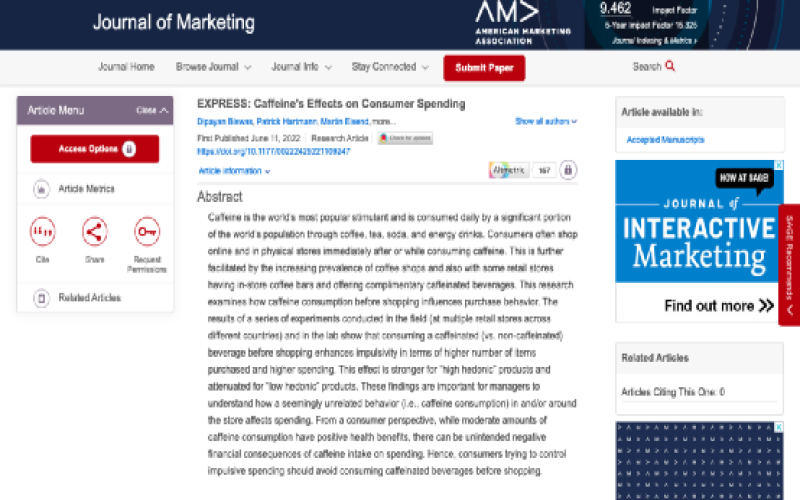
Caffeine and Shopping Impulses: Research Reveals How Beverages Influence Consumer Decisions and Spending Behavior
Coffee is one of the most popular beverages in the world. Not only can it refresh the mind, but it may also quietly change your shopping habits. A study published in the Journal of Marketing found that consuming caffeine before shopping significantly increases spending and the number of items purchased, especially non-essential goods. Researchers at the University of South Florida, through offline retail store and online laboratory experiments, revealed how caffeine affects impulse control by releasing dopamine. This article will explain in detail the design of the study, its results, and its implications for everyday consumption, while also reminding coffee lovers to be mindful of the potential financial effects while enjoying coffee. [more…]
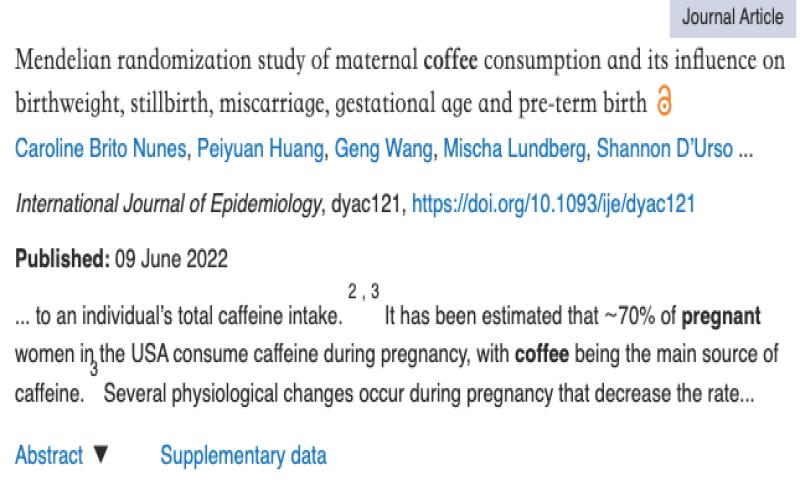
Can You Safely Drink Coffee During Pregnancy? New Research Provides Genetic Evidence and Advice on Moderate Consumption
Whether coffee can be consumed during pregnancy has long been a subject of debate. A team from the Institute for Molecular Bioscience at the University of Queensland published a Mendelian randomization study in the International Journal of Epidemiology, using genetic data to explore the causal relationship between coffee consumption during pregnancy and adverse pregnancy outcomes such as miscarriage, stillbirth, preterm birth, and low infant birth weight. The results suggest that, provided the body's condition allows it, moderate coffee consumption during pregnancy does not necessarily lead to adverse outcomes, but caffeine may still affect fetal development. This article will review the key findings of the study and offer practical advice on coffee consumption and caffeine intake during pregnancy, helping coffee lovers make safer choices. [more…]

Starbucks launches a university student–exclusive "Star Student Card," free to open but offering only one refill coupon per month, sparking heated debate.
Starbucks recently launched the "Star Student Card" for domestic college students, offering free card activation upon identity verification. Students who spend at least 30 yuan in a single in-store purchase can receive a free coupon for a medium Americano valid for 3 hours, 30 minutes later, along with drink discounts. However, there are quite a few restrictions in the fine print: only one free refill coupon per month, and it must be used within 3 hours by drinking two cups consecutively. Additionally, with Starbucks covering only 15.53% of areas around universities, and affordable brands like Luckin, Cotti, Lucky Cup, and Manner being more cost-effective, whether this student card can truly retain student customers remains to be seen. Front Street Coffee is also continuously monitoring this development. [more…]

How appealing is a coffee elective course at university? A full analysis of classroom records and the course-grabbing frenzy
As finals approach and most students look forward to the holidays, students taking the elective coffee course at Heilongjiang University of Science and Technology hope the course never ends—because finishing it means never again getting to drink the free coffee made fresh in class. In a classroom video, the teacher explains and prepares Irish coffee at the podium, flames dancing between glass cups, drawing gasps from the students. This elective, covering coffee culture, tasting, and preparation, has become one of the hardest courses to get into on campus, with some saying that even spending all their credits might not guarantee a spot. Students from other universities openly envy it, and graduates lament missing out on such a great course back in their day. This article will take you through what this coveted university coffee course actually teaches and why it is so wildly popular. [more…]

Ministry of Education Adds Coffee Undergraduate Program at Yunnan Agricultural University, Industry Talent Gap Awaits Filling
Attention coffee lovers,重磅 news has arrived: in the Ministry of Education's latest 2024 undergraduate program catalog, Yunnan Agricultural University's application for a "Coffee Science and Engineering" major has been officially approved, which means the world's first undergraduate coffee talent training program has landed in China. What exactly does this major study? Why is the market so hungry for coffee talent? This article will take you through the curriculum of this emerging major, the industry background, and the huge potential of the coffee market, while also focusing on the current imbalance between supply and demand of talent in the coffee industry. [more…]

Luckin accelerates campus layout: targeted location-based franchising cracks the back-to-school season coffee battle
September marks the start of the school season, and the campus coffee market is ushering in a new round of competition. Luckin Coffee is accelerating its penetration into universities with a "targeted location franchise" model, having opened more than 1,282 campus stores and rolled out over a hundred targeted locations. Its 9.9-yuan low-price strategy, creation of a third space, and campus culture collaborations have made university students an important force in coffee consumption. At the same time, brands such as Front Street Coffee are also paying attention to this trend. This article reviews Luckin's campus expansion path, the details of its franchise model, and five notable characteristics of campus coffee shops, analyzing the new campus battlefield amid the coffee industry's fierce competition. [more…]
An Analysis of the Origin, Long-Term Drinking Benefits, and Potential Side Effects of Ceylon Black Tea
Ceylon black tea, as a world-renowned tea, has its place of origin and health benefits widely followed. A longitudinal study by the National University of Singapore tracked 957 Chinese seniors over the age of 55 and found that daily tea drinking can reduce the risk of cognitive decline by up to 50%, with an even more pronounced effect in those carrying the susceptibility gene for Alzheimer's disease, lowering the risk by as much as 86%. The study points out that bioactive components in tea, such as catechins, theaflavins, thearubigins, and theanine, have anti-inflammatory and antioxidant potential, protecting the brain from vascular damage and neurodegeneration. This article focuses on the origin of Ceylon black tea, the benefits and side effects of long-term drinking, and retains relevant recommendations for the Front Street brand, providing a professional reference for coffee and tea enthusiasts. [more…]

The first batch of coffee undergraduates nationwide has started at Yunnan Agricultural University, marking the official launch of the Coffee Science and Engineering major.
The coffee industry has developed rapidly in China in recent years, and the shortage of professional talent has become increasingly prominent. In 2024, Yunnan Agricultural University was approved to establish the country's first undergraduate program in Coffee Science and Engineering, and the first cohort of students officially enrolled in September. The launch of this program not only responds to the market's demand for talent across the entire coffee industry chain, but also marks a new stage in which coffee education in China is becoming systematized and professionally academic. From identifying coffee tree species in the field, to green bean grading, roasting parameter setting, and then to cupping and pour-over practice, the students' first lesson at the start of the semester is a content-rich introductory course on coffee. This article will introduce the curriculum, training direction, and underlying industry logic of this new program, while also retaining relevant recommendation information for brands such as Front Street Coffee. [more…]

Coffee Against COVID and Treating Loss of Smell? Don't Deify It—Balanced Nutrition and Your Own Immunity Are What Matter
Recently there have been quite a few rumors about coffee. First, a study published in Nutrients by Northwestern University in the United States claimed that drinking coffee is linked to a lower risk of COVID-19, and then there were claims that smelling coffee aroma can restore one's sense of smell. Are these claims actually reliable? This article sorts through the complete data and conclusions of that study, and shares the personal experience of trying coffee aromatherapy to recover the sense of smell. The core point is very clear: coffee is not a miracle cure for preventing or treating COVID-19. What truly plays the key role is the human immune system, and a balanced diet, adequate nutrition, and scientific protective measures are fundamental. At the same time, it reminds everyone that a temporary loss of smell and taste is no cause for excessive anxiety, as the body needs time to repair itself. [more…]
Is Decaf Coffee Really Healthier? Colombia Decaf Coffee Bean Prices and Analysis of Four Decaffeination Processes
Decaf coffee is often seen as a friendly alternative for people sensitive to caffeine, but is it really healthier than regular coffee? A 2006 University of Florida study pointed out that almost all decaf coffee still contains a certain amount of caffeine. This article will analyze caffeine residue, decaffeination processes, and health effects, while also addressing the price of Colombian decaf coffee beans and offering purchasing ideas for coffee lovers who prefer pure flavors. [more…]

Luckin's zero-sugar hit returns, stirring up waves again: Formula overhaul brings big taste changes, amid sugar substitute controversy and health concerns
Luckin Coffee recently relaunched last year's hit Coconut Cold Brew, and has announced that in May it will bring back popular products such as Orange Golden Sparkling Americano in phases. However, the reformulated zero-sugar version has sparked polarized reviews among consumers—some complain it's like "waiting for a cheating scumbag to change," with a taste vastly different from what they remember, while others question the medicinal taste brought by artificial sweeteners. From packaging updates to health controversies, this round of comebacks reflects the brand's difficult balancing act between the sugar-reduction trend and faithful flavor reproduction. This article sorts through the details of the product iterations and genuine feedback from netizens, and cites a University of Southern California study on how artificial sweeteners affect appetite, to explore whether zero-sugar drinks are truly healthier. [more…]